
In Search of the Perfect Contract: What the FAR Overhaul Demands of the Federal Acquisition Workforce
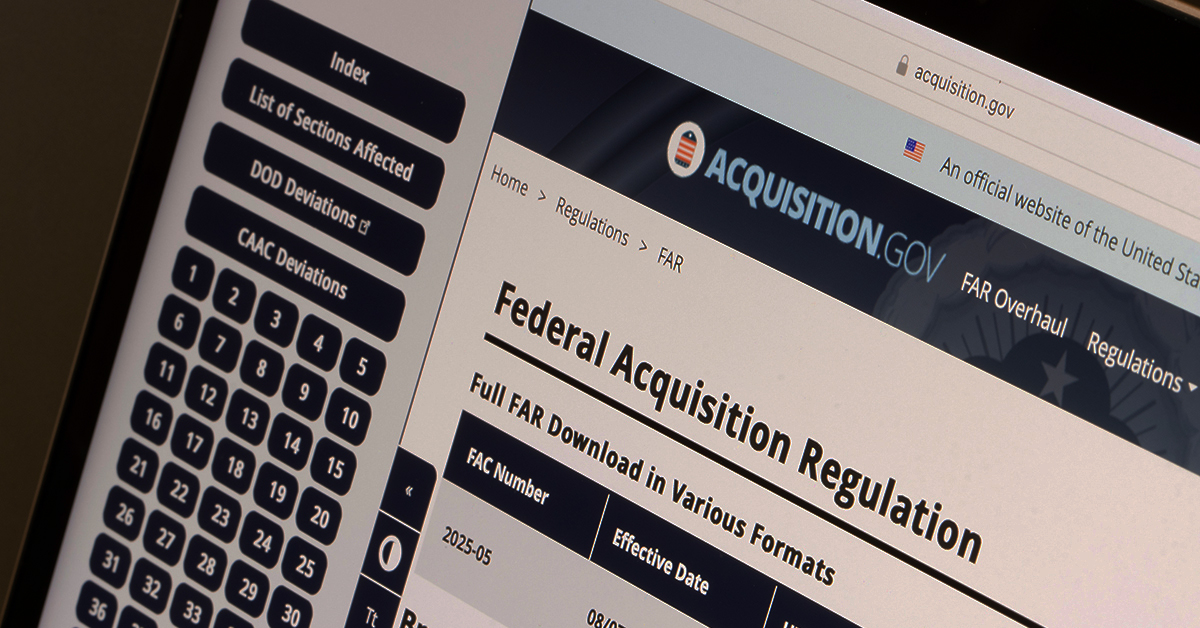
The federal acquisition community is standing at an inflection point. With the ongoing overhaul of the FAR, long-standing assumptions about how contracts are written, managed, and executed are being challenged. For a workforce that has spent decades navigating an ever-expanding rule set, this moment is both energizing and unsettling. It represents not just regulatory change, but a fundamental reset in how procurement processes define good business.
For years, contracting professionals have debated how to make the FAR more practical, more coherent, and more aligned with commercial realities. Those conversations have happened in training rooms, policy shops, and water coolers across agencies. The common theme has always been the same: the process should enable better outcomes, not just better compliance.
This is where the FAR overhaul carries system-level implications. By stripping away non-statutory requirements and emphasizing clearer, more principles-based guidance, the FAR Council is effectively expanding the acquisition workforce’s toolbox by removing barriers. The intent is not deregulation for its own sake, but empowerment. A simpler, more coherent FAR gives contracting professionals the space to exercise common sense judgment, apply market knowledge, and tailor solutions to mission needs.
That shift places new demands on acquisition leaders. Policy reform alone will not produce better contracts. Leaders must invest in workforce capability, encourage learning from successful contracts, and normalize the study of what actually works in execution. Shining examples should be examined, replicated, and scaled. Processes should be streamlined based on evidence, not tradition.
Technology plays a critical role in making this possible. As the acquisition system evolves, modern platforms are closing the gap between policy intent and day-to-day execution. Solutions such as Appian Government Acquisition Management (Appian GAM) are helping agencies move beyond manual, document-heavy processes toward intelligent workflows, automated compliance, and data-driven decision-making. By reducing administrative burden, these tools give contracting professionals back the time and cognitive space needed to focus on strategy, risk, and outcomes.
As acquisition modernizes, platforms like Appian GAM will be essential to turning FAR reform from policy language into operational reality. Without that bridge, simplification at the regulatory level risks being absorbed by legacy processes that were never designed to support speed, insight, or adaptability.
The question facing the acquisition community is not whether the perfect contract exists. It likely does not. The real question is whether the system is finally equipped to produce better contracts more consistently. With an evolving FAR, improved technology, and a workforce that understands both the mission and the market, the answer should be yes.
This moment calls for leadership, intentionality, and optimism. Agencies must lean into reform, empower their acquisition professionals, and use the tools now available to them. If they do, the system may not deliver perfect contracts, but it can deliver something just as important: contracts that work.
Learn more about how to harness the power of Appian for unparalleled efficiency in procurement.

Senior Manager
The recent FAR overhaul is not about fewer rules. It is about contracts that work.
